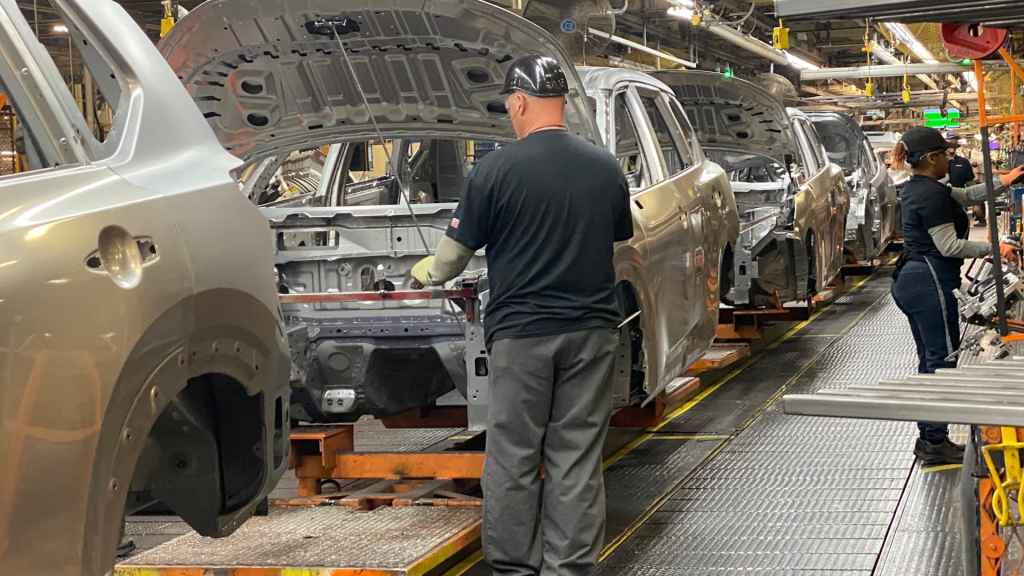
The automotive industry is bracing for significant impacts as President Trump’s proposed 25% auto tariffs loom large. Projections suggest a potential downturn in sales by millions of vehicles, leading to higher prices for both new and used cars and an estimated industry cost exceeding $100 billion.
Autoworkers at Nissan’s Smyrna Vehicle Assembly Plant in Tennessee are among those closely following the developments. With over 7,000 employees, the plant plays a pivotal role in producing a range of vehicles, such as the Leaf EV and Rogue crossover.
The looming auto tariffs have sparked concerns throughout the industry, with experts warning of the potential consequences on consumer demand and overall economic stability. The proposed 25% tariffs could result in a significant decline in vehicle sales, impacting automakers, dealerships, and consumers alike.
If implemented, the tariffs could lead to a substantial increase in prices for both new and used vehicles. This price hike is expected to deter potential buyers, further exacerbating the decline in sales forecasted by industry experts.
The financial implications of the auto tariffs are staggering, with estimates suggesting that the industry could face costs exceeding $100 billion. These costs would likely be passed on to consumers in the form of higher prices, making it more challenging for individuals to afford new vehicles.
The auto industry is already grappling with challenges such as supply chain disruptions and semiconductor shortages. The additional burden of steep tariffs could further strain an industry that is already navigating a complex and evolving landscape.
While the full extent of the impact remains uncertain, industry stakeholders are closely monitoring the situation and preparing for potential disruptions in the market. Automakers are evaluating various strategies to mitigate the effects of the proposed tariffs, including exploring alternative supply chain options and adjusting production plans.
As the automotive industry braces for the potential fallout from the ongoing tariff discussions, stakeholders are calling for a comprehensive and coordinated approach to address the challenges ahead. The outcome of these negotiations will have far-reaching implications for the industry, shaping its trajectory in the months and years to come.




 Silicon valley business review